
This Trans-Kingdom Crossing takes you from the Red Sea to Arabian Gulf. Begin in Jeddah and take the train to Medina and AlUla to see the Hegra tombs. Travel overland to the Jubbah rock art sites and the massive Camel Market in Buraydah. The journey through the heart of Najd includes the stunning Ushaiger Heritage Village and the capital Riyadh. Finally, take the train to the Al Ahsa Oasis and explore the Eastern Province’s Uqair Port and the futuristic Ithra Center in Dammam.
WWT22335
Arrival at Jeddah airport, after visa and immigration formalities our representative will meet and escort the guests to their air-conditioned vehicle for their transfer to the hotel. Dinner at leisure. Overnight in Jeddah.
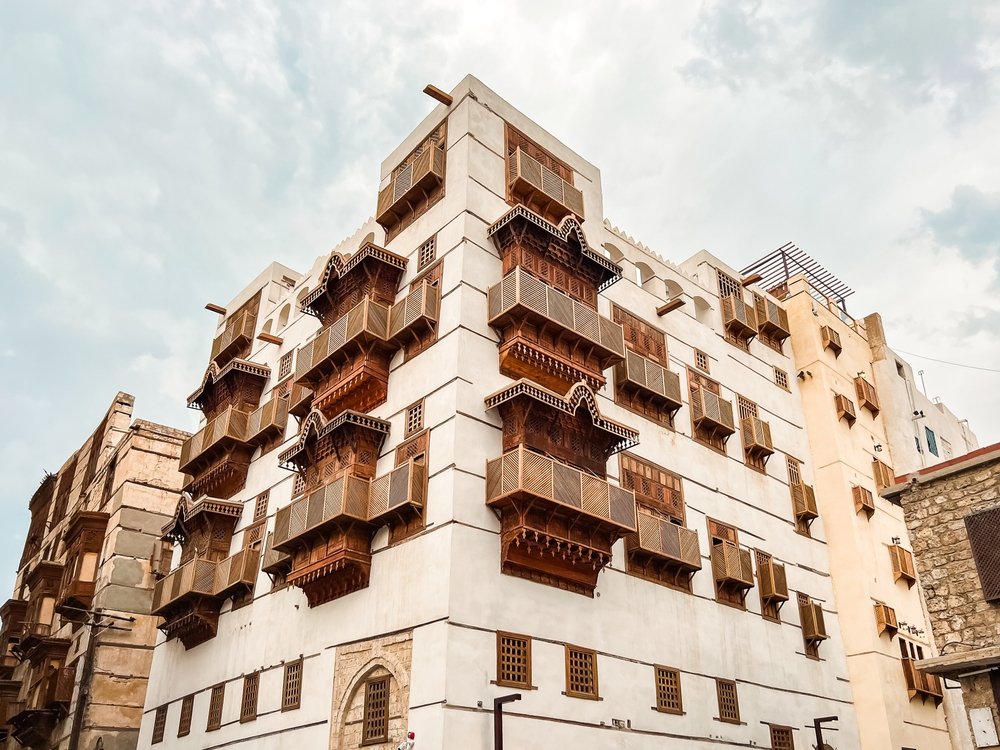
Breakfast at your hotel. We will start our tour with the visit of Abdul Raouf Khalil Museum that presents the local and Arabian heritage. A unique site. We will then hit old Jeddah. We will enjoy a wonderful walking in Al-Balad, the old part of the city. This walk tour of the old Town will take you along all the less known must-see local spots: Old Market hidden gems, Old Jeddah hidden galleries, local Jeddah food only for locals… While visiting Al-Balad, visitors will be taken to see Beit Nassif (from outside), one of the prominent renovated structures in the old city, which dates back to the mid 1800’s. The five-story building provides a rare opportunity for the visitors to experience the blend of traditional architecture with modernity.
We will pass by the Old market in Gabel street and the Ukash Mosque. We will then head to a traditional Saudi restaurant to enjoy our lunch. We will pass by the Al Rahmah Mosque. After that, we will visit The Floating Mosque, this single domed architectural marvel that sits literally on the sea, symbolizes Jeddah’s bold storm into the modern age. Sitting on an enviable location, the mosque’s courtyard offers unencumbered views of the Red Sea. Our tour will end with the Jeddah Corniche which is the 30 km coastal resort area of the city of Jeddah. Located along the Red Sea, the corniche features a coastal road, recreation areas, pavilions and as well as King Fahd’s Fountain (usually operates after 6pm), the highest fountain in the world. Dinner and overnight in Jeddah.
Breakfast in the hotel & check out. Depart to the Jeddah train station heading to Medina. This high-speed train will take approximately 2 hours to reach Medina. Upon arriving, we start the orientation tour of Medina. In the city center, the vast Al-Masjid an-Nabawi (Prophet’s Mosque) is a major Islamic pilgrimage site. Its striking Green Dome rises above the tombs of the Prophet Muhammad and early Islamic leaders Abu Bakr and Umar. The Masjid al-Qiblatain (Qiblatain Mosque) is known as the site where the Prophet Muhammad received the command to change the direction of prayer to Mecca. We conclude the day with a short walk near Mount Uhud. Lunch in the city. Check in at the hotel. Dinner and overnight in Medina.
Breakfast at the hotel. We will head this morning to the ancient town of AlUla was an important staging post on the frankincense trade route to Oman and Egypt. We will pass by the ancient city of Khaybar. This is probably the best-preserved ancient oasis of Saudi Arabia as it is built in a natural depression that can be flooded, reason why the modern city was built further away. It is mention in a Neo-Babylonian text that tell its conquest in 552 BCE by Nabonidus, the last King of Babylon. It became in the year 7 of Islam an important battle place between the Muslim and the Jews that saw the troops of Mohamed (PBUH) and Ali victorious.
We will tour the Al Rawan Viewpoint and enjoy a self-guided along the oasis trail surrounding Al Nizar Fort, and discover the biodiverse Ain Al Jammah & Hasat Al Dabal. Lunch en route. Then we depart to AlUla at the end of the afternoon and check-in. The drive to AlUla will be approximately 2 1⁄2 – 3 hours. Dinner and overnight in AlUla.
Breakfast at the hotel. Today we depart for Dedan/ Ikmah tour. AlUla is an ancient oasis that is inhabited for the last 7000 years as testify ancient carvings in and around the oasis. During the 1st millennium BCE the city of Dedan develops thanks to its strategic location on the frankincense trade road to become one of the oldest Arabian kingdoms that ruled over most of what is today Tabuk and Madinah provinces. Then will pass by the ancient city of Dedan that was an important oasis on the frankincense trade route between Southern Arabia and the Mediterranean World.
Lunch in the city. Then we get a glimpse into AlUla’s not-so-distant past on the AlUla Old Town Tour. We will go through AlUla Old Town, where pilgrims, travelers and permanent settlers congregated through the ages. Inhabited from before the 12th century up until the early 1980s, AlUla Old Town offers researchers unique oral histories and living memory that the area’s other heritage sites cannot. At the end of the afternoon, drive to the hotel, dinner and overnight in AlUla
Breakfast at the hotel. Today we will start our journey with the visit of the famous Hegra (Madain Saleh). We will be exploring the first UNESCO World, heritage site of the Saudi Kingdom, the monolith of Mada’in Saleh, also known as “Southern Petra “, dating from the Nabateans period (100-500 BC. Here you’ll explore a few of the over a hundred remarkably well preserved tombs set in a desert landscape, while learning about the ancient people and culture of AlUla. Evidence for human presence and use of the site dates back beyond the 1st millennium BCE, but it was the location of the Nabataean city from the end of the 1st millennium BCE into the 1st millennium CE. The city was at its peak from the late 2nd century BCE to the 2nd century CE. Lunch in the city. We will then visit Jebel Al- Fil the “Elephant Rock”. At the end of the day, we go back to our hotel and enjoy dinner. Overnight in AlUla.
Breakfast at the hotel. This morning we will start our journey to Jubbah that lies on an ancient lake. Several archaeological sites of human settlement from the Middle Paleolithic period were found around the margin of the paleolake. Jubbah is surrounded by large sandstone outcrops that are filled with ancient petroglyphs and inscriptions on the rock face. Jubbah benefited from past humid phases that turned the arid Arabian Peninsula into a savannah similar to what is found today in Africa. During the last humid period that took place from the 10th to the 6th millennium BCE the African monsoon rains filled rivers and lakes where wildlife thrived. If the animals that used to live there became instinct because of the desertification that started during the 6th millennium BCE, some men fixed forever their presence in Jubbah thanks to carvings of aurochs, cheetahs, lions.
“Those drawings are still visible today in the sides of several sandstone outcrops located on the western side of the paleolake like the Jebel Umm Sanman. Jubbah, the other major carving site of Hail Province, where listed as UNESCO World Heritage in 2015
for their numerous petroglyph panels and rich. We will pass through the famous desert of Nefuda Al Kabir or Al-Nefud, it is occupying a great oval depression. It is 290 kilometers long and 225 kilometers wide, with an area of 103,600 square kilometers.”
Lunch will be served en route. After this visit, we continue our route to the famous city of Ha’il. Renowned for its hospitable people, Hail is traditionally the home of Saudi Arabia’s poets and writers. An interesting point about Hail, most of the early European explorers passed by this city during the 19th century (Charles Doughty, Lady Blunt, Charles Huber, Julius Euting…Upon arrival, we will transfer to our hotel. Dinner and Overnight in Ha’il.
Breakfast at the hotel. We will start our day with the visit of Al Ha’il, we will visit the A’Arif Fort and the nearby heritage museum (if open). Then we will have a walk at the traditional market where we will find the local delicacies. We will pass also by the Hail Regional Museum, and if it is open, we will drop there to admire its collection.
Lunch in the city. Then we start our way to Buraydah, we will pass the imposing Shammar mountain range, we will stop at a major historical site on our road called Fayd. It is the most important pilgrimage city that thrived during the golden age of Baghdad as it is located half way between Baghdad and Mecca. We will visit a small museum and a large archaeological site that has been restored. Buraydah is the capital of Al-Qassim Region in North central Saudi Arabia in the heart of the Arabian Peninsula, and it is considered being the most conservative city of Saudi Arabia. On arrival, quick orientation of the city before we check-in at hotel. Dinner and overnight in Buraydah.
Breakfast at the hotel. Today we need to start early to make the most of a truly unique Saudi experience. Buraydah’s lively camel market is located just a short distance outside modern-day Buraydah but the experience may feel like stepping into a distant era of times gone by. This is the world’s largest camel market where thousands of camels, goats and sheep are traded every day and this morning is sure to be a feast for the senses. We head back into the city to stroll through the mouth- watering date market to pick some tasty treats before driving towards the capital city of Riyadh.
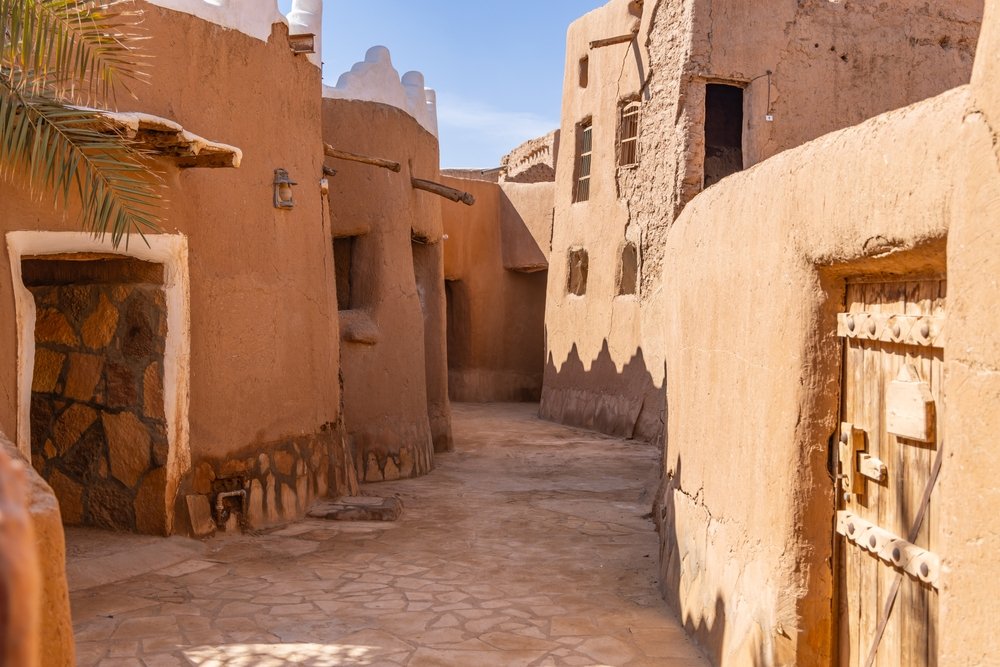
Lunch before departure. En route we will pass the village of Al-Mithnab, before we reach the highlight of our day the heritage village of Ushaiger, one of the oldest settlements in the region which boasts some stunning traditional Najdi architecture and considered one of the most attractive places in the country. We will reach finally Riyadh the capital at the end of the day. Check in, dinner and overnight in Riyadh.
Breakfast at the hotel. We will start our tour of mystic Riyadh by visiting the National Museum which is the primary custodian of the Saudi national heritage and culture. The Museum is a place of learning and discovery; it offers an overview to the history of Arabian civilization from Prehistory to our modern era.
We continue thereafter to the nearby Murabba Palace that is one of the historic buildings of the city. The palace was named after its square with the form of 400 by 400 meters. We will stop then for lunch in a typical local Saudi restaurant.
Afternoon we will continue our tour of mystic Riyadh by visiting the Masmak Fort and its museum that depicts the history of the history of the conquest of Arabia by the Al-Saud family. The palace was built during the reign of Abdullah bin Rashid in the year 1895 A.D. to serve as military garrison for the Abdullah bin Rashid army. His Majesty King Abdulaziz, the father of the nation today, captured the fort in 1902 making of this fort the birthplace of the 3rd Saudi Kingdom, the modern one we live in.
We will then visit the Dira Souq famous for buying antique carpets and other useful Saudi heritage antiques, while walking we will always smell sandal wood fragrance. We will finish our tour with a stunning viewpoint from one of the famous landmarks of Riyadh, the Kingdom Tower andthe Faisaliah Tower, both great architectural achievements. At the end of the afternoon drive back to your hotel. Dinner and overnight in Riyadh.
Breakfast at the hotel. Day excursion by fast train to Al-Hofuf which is the main city of Al-Ahsa a region in the Eastern Province of Saudi Arabia. Al-Ahsa is the largest oasis in the world with an area of around 85.4 km2 (33.0 sq. mi), more than 2.5 million palm trees that are fed from a huge underground aquifer which allows agriculture all year round in a region that is otherwise desert. Al-Ahsa also hosts an ancient secret: The Greek geographer Strabo described an ancient Arab kingdom whose capital Gerrha had “fancy tools made out of gold and silver, such as the family gold, right triangles, and their drinking glass, let alone their large homes which have their doors, walls, roofs filled with colors, gold, silver, and holy stones”. Until today this site has not been found by archeologists but one of the candidates is the modern city of Al-Hofuf where we will start our exploration of Al-Ahsa.
There we will visit the Ibrahim Fort and its mosque, then the Jebel Qarah, a limestone outcrop with caves and canyons and that offers overlooking viewpoint on the huge palm tree cultivations. We will finish this first day in Al-Ahsa at the historical mosque of Jawatha. Dinner and overnight in Al-Hofuf.
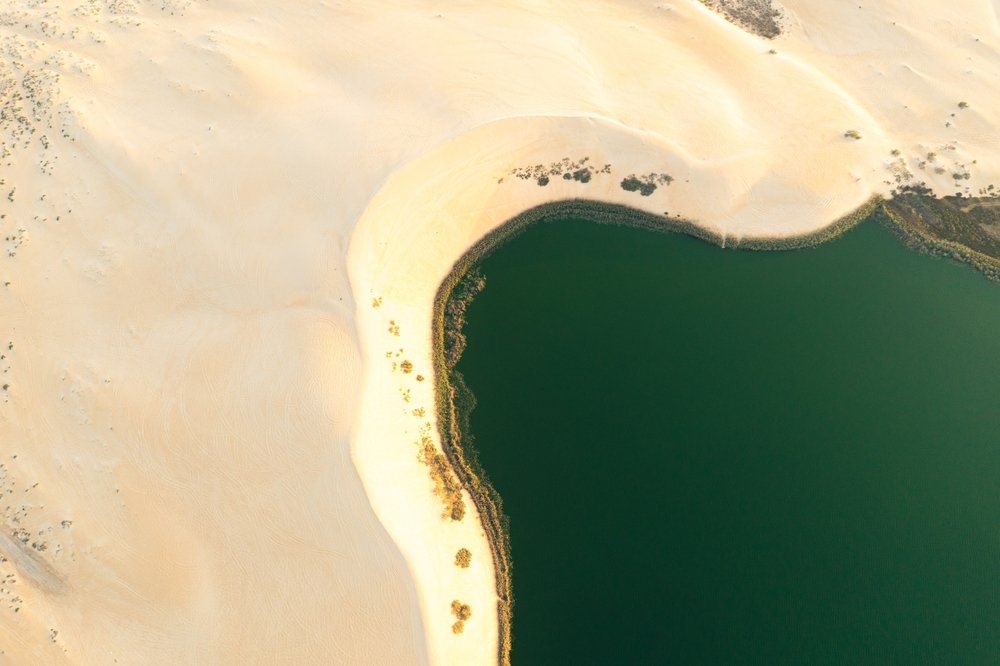
Breakfast at the hotel. Today we will explore the desert of Al-Ahsa, starting with a stunning viewpoint on one of the lakes located just few kilometers east of Al-Hofuf that reveal the vast water resources of the grounds of Al-Ahsa. This special one is called the Yellow Lake because of the color of the surrounding dunes. This landscape made of flat grounds rich with water in between dunes is typical of the Eastern Province and is called sabkha. They are particularly impressive 500 kilometers to the south in the vastest sand dune desert in the world called the Rub’ Al-Khali.
After the Yellow Lake we will go for a special drive through those dunes and sabkhas. In the afternoon we will drive to the Arabian Sea at the old port of Uqair on the beautiful Half-Moon Bay. This old port that included administrative buildings, a fort, and a market, was built by the Ottomans in the 17th century has been partly renovated recently. Our last drive will lead us to Dammam, the modern capital of the Eastern Province where we will enjoy our last dinner of this trip. Dinner and overnights in Damam.
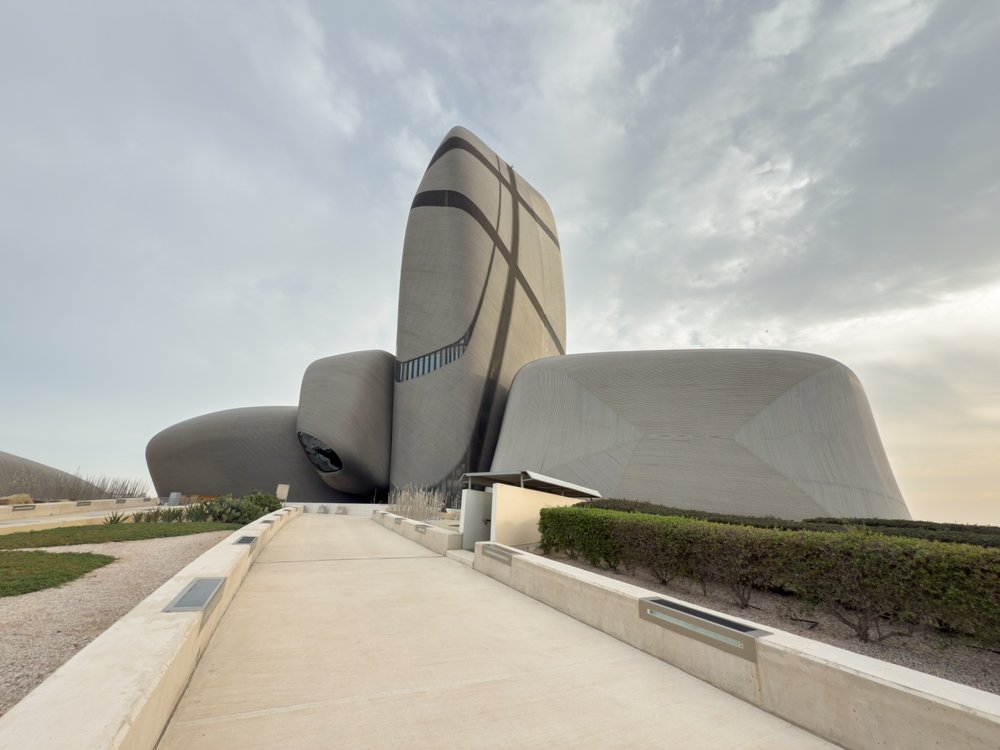
Breakfast at hotel. Start your tour by visiting the King Abdulaziz Center for World Culture for a photo stop. It rises 90 meters from the desert, The King Abdulaziz Center for World Culture also known as Ithra is situated in Dhahran, Saudi Arabia. It was built by Saudi Aramco and inaugurated by King Salman bin Abdulaziz on December 1, 2016.
Then you will visit the Alfan Sharqy Urban Art Exhibition Bayoniya, Al Khobar. The historic neighborhood of Bayoniya got a makeover in 2018, courtesy of a coterie of young Saudi artists who turned its streets into a giant canvas, complete with an explosion of graffiti.
Then we will move on to the next visit to Taybeen Museum, It is a passion project, powered by nostalgia. The the300-square-meter museum in Al Khobar was born of Majid Al Ghamdi’s urge to preserve the vintage finds of his youth, a pastime that grew into a collection of retro toys, board and video games, posters, televisions, cameras, and branded food and drink containers 10,000 pieces are strong. With a cabinet charting the evolution of Coke bottles from the 1970s on, plush Sesame Street character toys and vintage Barbie’s, there is no better place to relive your childhood.
Lunch in the city. At the end drive to Heritage Village in Dammam, Part Museum, part restaurant, Dammam’s turret- topped. it gives visitors a glimpse into a simpler life. The five-story building houses a museum, where troves of jewelry, manuscripts, fabrics, and other artifacts are on display, and a small craft-filled market where Arabic perfumes, incense, woven palm-frond baskets, and wall hangings are sold. But the biggest draw here for many is the restaurant. Curl up on traditional floor cushions and sample delicious local fare, including delectable mezze spreads and platters of grilled meats and rice, for an experience that comes close to eating in a Saudi home. Dinner and overnights in Dammam.
Breakfast at your hotel. Check out at 12h00 noon. Depending on your departure time, you will be transferred to DAMMAM airport for your departure back to your hometown. END OF SERVICE.